Built by engineers who got tired of watching Lighthouse lie.
Pulsecadence started from a single observation: the performance dashboards most engineering teams rely on optimize for the wrong number.
The gap that started it all
Grace Yoon spent the better part of a decade as a frontend performance engineer at consumer-scale products — the kind where a 100ms LCP regression translates directly to a measurable conversion drop. At each company, the same pattern played out: the Lighthouse CI check passed, the engineering blog celebrated the score, and the product team quietly watched mobile engagement metrics decline.
The problem wasn't that anyone was lying. It's that lab tools can only measure what a lab can control. They run a single pass on a configured connection from a fixed location. Real users arrive on mid-range Android devices, on variable LTE, having already loaded four other tabs — and they carry the full weight of every third-party script your growth team added in the previous sprint. The lab can't see the tag manager container loading a retargeting pixel synchronously. It can't see that your p75 on mobile 4G is 4.8 seconds while your p50 on desktop fiber is 1.2 seconds. The field data diverges, and the lab data gives everyone a clean conscience.
"I spent two years instrumenting PerformanceObserver events in production scripts just to get the numbers I needed. The tooling shouldn't require that. p75 on real devices should be the default view, not a bespoke analytics query."
— Grace Yoon, CEO & Co-Founder
Grace and co-founder Dmitri Voronov started building Pulsecadence in Seattle in 2021. The goal was narrow by design: a RUM tool that tracks p75 on real user devices, attributes render-blocking delays to specific third-party scripts, and fires on real-user data when a deploy breaks your percentiles — not a general observability platform with a RUM module bolted on. Pulsecadence does not replace your APM or your synthetic uptime checks. It measures the one thing those tools can't: what the page actually felt like to the user who just bounced.
Pulsecadence raised angel backing in December 2025 and is currently a team of eight people based in Seattle, WA.
Eight people. One product.

Grace Yoon
CEO & Co-Founder
Built and maintained frontend performance monitoring at consumer-scale products before founding Pulsecadence in 2021. Specializes in PerformanceObserver internals, percentile analysis, and making field data actionable for engineering teams.
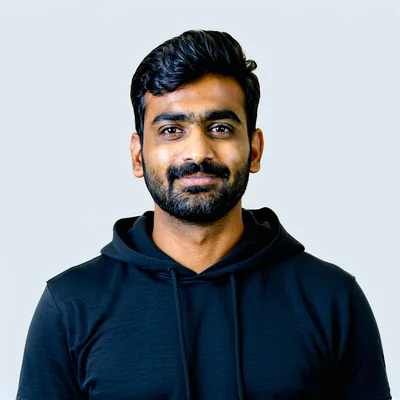
Dmitri Voronov
CTO & Co-Founder
Distributed systems engineer who designed Pulsecadence's session ingestion pipeline — the part that accepts every PerformanceObserver event from every session without sampling or dropping tail events. Previously built high-throughput event infrastructure for real-time analytics products.

Claire Nakamura
Head of Engineering
Leads core product engineering. Wrote Pulsecadence's snippet from scratch — the 3KB async loader that ties together LCP, INP, CLS, TTFB, custom marks, and ResourceTiming into a single coherent session record. Deep background in browser performance APIs and the Navigation Timing spec.
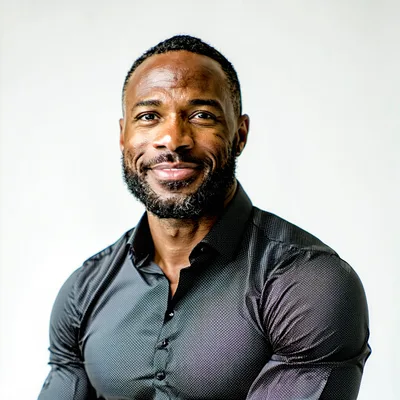
Marcus Osei
Product Lead
Talks to SREs and frontend engineers every week — the interviews that shape which segment dimensions get added next and which alert threshold defaults actually prevent page fatigue. Previously shipped observability tooling at a cloud infrastructure company.
Seattle, WA
We are based in Seattle's SoDo district, one block south of the stadiums and a few minutes from the cluster of infrastructure and cloud-native companies that built a good chunk of the modern web's backend. It's a useful place to be when your product is about what happens at the browser after all that backend resolves.
Pulsecadence
705 5th Avenue South, Suite 600Seattle, WA 98104
United States
Phone: +1 (206) 707-1342
Email: [email protected]